
Hall Effect Sensor Vs Reed Switch
Hall Effect Sensor Vs Reed Switch - Web hall effect sensors measure the strength of a magnetic field perpendicular to the sensor's surface. Web hall effect sensors and reed switches are both commonly used for magnetic field detection and switching applications, but they differ in their operating principles, characteristics, and applications. In contrast to reed switches, hall effect sensors require power to operate, but they provide accurate and consistent results. Digital hall effect sensors offer high reliability and can be programmed to activate at a given magnetic field. Web if you want to detect a mechanical motion in a fast and reliable way, a hall effect sensor and a tiny magnet could very well make your life easier without too much expense, as long as you can power it. Learn how a hall effect sensor works and what differentiates it from a reed switch.
Web the reed switch has superior isolation from input to output and across the switch up to 1015 ohms. Web hall effect sensors and reed switches are both commonly used for magnetic field detection and switching applications, but they differ in their operating principles, characteristics, and applications. With differing functionalities, reed switches and hall effect switches should be chosen carefully based on the specific environment and requirements of the intended application. Web if you want to detect a mechanical motion in a fast and reliable way, a hall effect sensor and a tiny magnet could very well make your life easier without too much expense, as long as you can power it. Web strictly speaking, however, hall effect switches are transducers since they convert magnetic energy to electrical energy—they can be used as switches with some additional circuitry.

Buy 15 Pcs Hall Effect Sensor Switches Linear Hall Effect Switch
Web unlike reed switches, which are mechanical and rely on contacts moving in a magnetic field, hall sensors are entirely electronic and have no moving parts, so (theoretically, at least) they should be more reliable. Reed switches are true magnetic switches since they close or open in the presence or absence of a magnetic field. Learn how a hall effect.

Model railroad turntable Project Guidance Arduino Forum
Additionally, halls reach higher signal repeatability due to a lack of switch hysteresis. Web hall effect sensors measure the strength of a magnetic field perpendicular to the sensor's surface. Learn how a hall effect sensor works and what differentiates it from a reed switch. Both devices utilize changes in a magnetic field to activate or deactivate switch contacts. Web if.

Reed Sensors vs. Hall Effect Sensors Meder Electronics DigiKey
With differing functionalities, reed switches and hall effect switches should be chosen carefully based on the specific environment and requirements of the intended application. Web in the world of electronic sensing, the choice between a reed switch and a hall effect sensor can greatly impact the performance and functionality of your co. Web unlike reed switches, which are mechanical and.

Learn How Hall Effect Sensor Pinout Works, 59 OFF
Web however, several remarkably interesting advantages are observed when comparing reed sensor technology to hall effect technology. Web unlike a reed switch, a hall effect device contains active circuitry, so it draws a small amount of current at all times. Web reed switches and hall effect switches are two types of magnetic switches that detect magnetic fields to operate. Web.
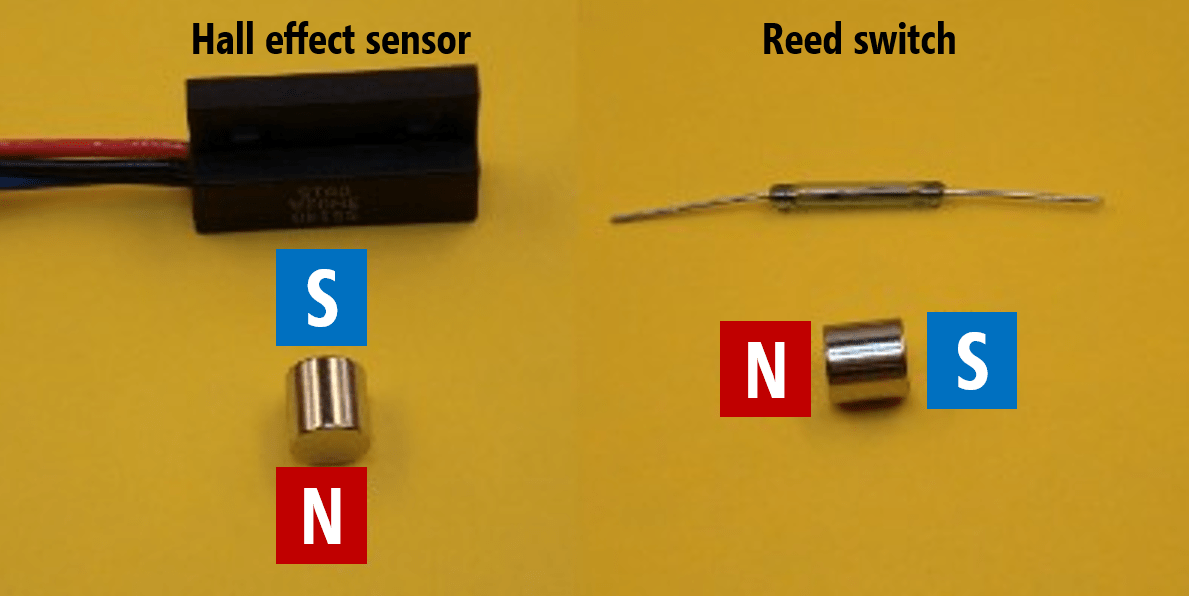
Hall Effect Sensors Physical Computing
Web a key difference between reed switches and hall effect sensors is the proper orientation required for an activating magnet. Both devices utilize changes in a magnetic field to activate or deactivate switch contacts. Let's explore the differences between hall effect sensors and reed switches: Web if you want to detect a mechanical motion in a fast and reliable way,.
Hall Effect Sensor Vs Reed Switch - This reduces leakage currents to fempto amps (1015 amps) levels. For applications with frequencies lower than 1khz, for example flow meters in white goods, reed switches are recommended. Reed switches are true magnetic switches since they close or open in the presence or absence of a magnetic field. Web hall effect sensors and reed switches are both used for magnetic sensing. Web the reed switch has superior isolation from input to output and across the switch up to 1015 ohms. Web hall effect sensors and reed switches are both commonly used for magnetic field detection and switching applications, but they differ in their operating principles, characteristics, and applications.
Let's explore the differences between hall effect sensors and reed switches: Web in the world of electronic sensing, the choice between a reed switch and a hall effect sensor can greatly impact the performance and functionality of your co. Digital hall effect sensors offer high reliability and can be programmed to activate at a given magnetic field. Web however, several remarkably interesting advantages are observed when comparing reed sensor technology to hall effect technology. Learn how a hall effect sensor works and what differentiates it from a reed switch.
Web Unlike Reed Switches, Which Are Mechanical And Rely On Contacts Moving In A Magnetic Field, Hall Sensors Are Entirely Electronic And Have No Moving Parts, So (Theoretically, At Least) They Should Be More Reliable.
In contrast to reed switches, hall effect sensors require power to operate, but they provide accurate and consistent results. With differing functionalities, reed switches and hall effect switches should be chosen carefully based on the specific environment and requirements of the intended application. This reduces leakage currents to fempto amps (1015 amps) levels. Both devices utilize changes in a magnetic field to activate or deactivate switch contacts.
Web In The World Of Electronic Sensing, The Choice Between A Reed Switch And A Hall Effect Sensor Can Greatly Impact The Performance And Functionality Of Your Co.
Web unlike a reed switch, a hall effect device contains active circuitry, so it draws a small amount of current at all times. Web a key difference between reed switches and hall effect sensors is the proper orientation required for an activating magnet. Digital hall effect sensors offer high reliability and can be programmed to activate at a given magnetic field. Though, reed switches can switch billions of cycles under 5 volt loads.
Learn How A Hall Effect Sensor Works And What Differentiates It From A Reed Switch.
Web however, several remarkably interesting advantages are observed when comparing reed sensor technology to hall effect technology. Web the reed switch has superior isolation from input to output and across the switch up to 1015 ohms. Web reed switch and hall effect sensor applications include consumer appliance and automotive systems. That said, hall switches operate 500 million cycles in their lifetime.
Let's Explore The Differences Between Hall Effect Sensors And Reed Switches:
For applications with frequencies lower than 1khz, for example flow meters in white goods, reed switches are recommended. Additionally, halls reach higher signal repeatability due to a lack of switch hysteresis. Web if you want to detect a mechanical motion in a fast and reliable way, a hall effect sensor and a tiny magnet could very well make your life easier without too much expense, as long as you can power it. Web hall effect sensors measure the strength of a magnetic field perpendicular to the sensor's surface.